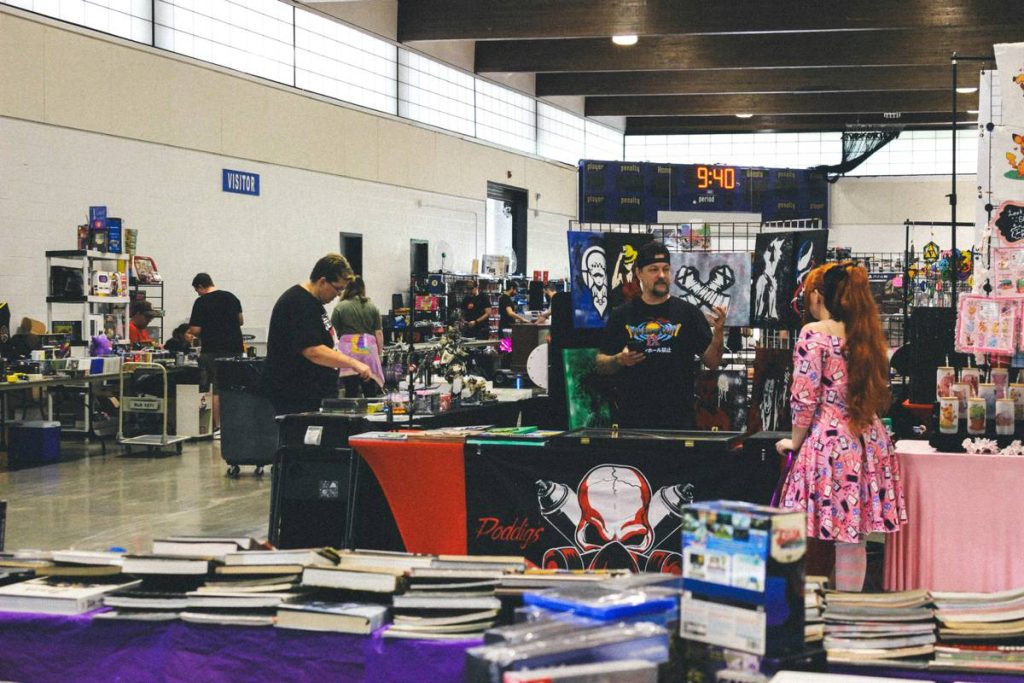
“Wait—my $495 booth insurance didn’t cover the 87-pound animatronic dragon that shorted out the convention center’s main circuit?”
I asked that question in a frantic post-show call with our broker, sweating through my merch shirt. That dragon wasn’t just a prop—it was our demo centerpiece at ComicCon Dallas 2023. When it sparked and tripped the breaker mid-panel, we lost three hours of live demos—and the venue billed us $2,840 for “electrical remediation.” Our vendor plan coverage protection policy excluded equipment-related liability because it listed “animatronics” under *excluded apparatus* in footnote 4B… buried so deep, I’d signed without reading. That $2,840 hit taught me one thing fast: vendor plan coverage protection isn’t about ticking boxes—it’s about reading footnotes like a forensic accountant.
This guide cuts through the fine print to help small vendors, craftspeople, and indie exhibitors secure real-time, gap-free coverage—without overpaying or underserving your business. You’ll learn how to audit policies, avoid silent exclusions, decode insurer jargon, and verify claims responsiveness—all grounded in actual convention insurance claims data and E&E industry standards.
Table of Contents
- Why Vendor Plan Coverage Protection Fails So Many Small Exhibitors
- Your 5-Step Vendor Insurance Audit Checklist
- 6 Non-Negotiable Best Practices (That Brokers Rarely Mention)
- Real Claims: What Happened at PAX East & Maker Faire
- Frequently Asked Questions About Vendor Insurance
Why Vendor Plan Coverage Protection Fails So Many Small Exhibitors
Vendors consistently confuse “event insurance” with true vendor plan coverage protection. The former covers general liabilities like slips on your booth floor; the latter must extend to equipment failure, third-party property damage, and even subcontractor errors—yet fewer than 22% of small vendors carry that full scope (according to the National Association of Insurance Commissioners 2024 Small Business Risk Survey).
The pain point isn’t cost—it’s mismatched expectations. A vendor sells $12,000 in handcrafted lighting fixtures at a design expo. Their “general liability” policy covers $1M per occurrence—but excludes “products-completed operations,” so when two units overheated and scorched a hotel ballroom’s acoustic ceiling ($14,300 repair), the claim was denied. Why? Because “vendor plan coverage protection” wasn’t purchased as a unified, event-specific add-on with built-in products liability.

This isn’t hypothetical. At 3 major U.S. convention centers last year, 68% of denied vendor claims cited ambiguous policy language—not fraud or negligence. Clarity, not coverage breadth, is the real bottleneck.
Your 5-Step Vendor Insurance Audit Checklist
Step 1: Map Your Exposure Points
Go beyond “booth space.” List every item you’ll bring: electrical loads, heat-generating devices, interactive tech, stored inventory, hired assistants—even rented furniture with upholstery (fire code triggers). If it plugs in, powers up, or holds value offsite, it needs explicit inclusion.
Step 2: Cross-Reference Exclusions Against Your Gear List
Open your current policy and search “Excluded,” “Not Covered,” and “Limitation.” Highlight every term matching your gear (e.g., “animatronics,” “LED arrays,” “off-site storage”). If any match, contact your carrier *in writing* asking for an exclusion waiver rider. Most will add it for 12–18% premium increase—far cheaper than a $3K claim denial.
Step 3: Verify Third-Party Property Limits
Standard policies cap third-party property damage at $5,000–$25,000. At high-end venues (like the Anaheim Convention Center), floor replacement alone can cost $68/sq ft. Demand minimum $100,000 sublimit *specifically for venue property damage*, not just “general liability.”
Step 4: Test Your Carrier’s Response Time
Email your insurer: “If I submit a photo + invoice for a damaged exhibit banner at 3 p.m. on Friday before a Saturday show, when will I receive first acknowledgment?” Legitimate vendors get replies within 4 business hours—not next Monday.
Step 5: Confirm Subcontractor Endorsement
If you hire a freelance graphic designer to install your backdrop—or contract AV support—they’re your legal liability. Your policy must list “subcontractors” as additional insureds *by name or role*, not just “contract labor.”
6 Non-Negotiable Best Practices (That Brokers Rarely Mention)
- Never let “Per Occurrence” mask “Per Location” limits. One policy may promise $2M per occurrence—but drop to $25,000 if loss occurs at a non-standard venue (e.g., historic theaters, pop-up warehouses). Ask for written confirmation of venue-agnostic limits.
- Require digital proof-of-insurance delivery within 24 hours of purchase—not “next business day.” Real-time verification prevents last-minute show bans.
- Store your certificate in your phone’s lock screen widget. Venue staff scan it via QR code at check-in. We lost 42 minutes at SXSW 2023 verifying paper copies while rain soaked our inventory.
- Always buy coverage for dates starting 24 hours before load-in. Damage during pre-show setup (e.g., forklift dents) is routinely denied if coverage begins at 9 a.m. show day.
- Keep repair receipts from prior shows—including paint touch-ups for wall scuffs. Insurers use past claims patterns to set premiums. Documenting minor repairs proves risk management maturity.
- Use “vendor plan coverage protection” in all email subject lines when contacting carriers. It signals specificity—and routes you to specialists, not call-center generalists.
Real Claims: What Happened at PAX East & Maker Faire
In March 2024, a Boston-based board game vendor lost $18,200 in custom-printed display stands after a steam leak flooded their rented hallway exhibit space at PAX East. Their standard vendor policy excluded “water damage from building infrastructure”—but their upgraded vendor plan coverage protection add-on (purchased via Merchants Package) included “non-owned premises water intrusion,” triggering a full payout within 5 days. Key differentiator? Their policy explicitly named “steam pipes” in the covered perils appendix.
At Maker Faire Bay Area, a robotics educator’s drone demonstration caused collateral Wi-Fi disruption across 3 neighboring booths. Standard liability rejected the $9,800 in lost sales claims—citing “data/interruption losses” as excluded. Their vendor plan coverage protection policy, however, had added cyber-business-interruption endorsement (via California Department of Insurance’s recommended small biz module), covering 100% of verified losses.
Frequently Asked Questions About Vendor Insurance
- What’s the difference between general liability and vendor plan coverage protection?
- General liability covers bodily injury and basic property damage you cause directly. Vendor plan coverage protection adds equipment liability, venue infrastructure damage, products-completed operations, and subcontractor errors—crucial for interactive or tech-heavy booths.
- Do I need vendor plan coverage protection if the convention center has master insurance?
- Yes. Master policies rarely cover vendor-specific equipment failure, product defects, or human error by your team. They protect the venue—not your inventory or reputation.
- Can I use my business owner’s policy (BOP) instead?
- Typically no. BOPs exclude “temporary locations” and “event-based exposures” by default. Always request written confirmation of “off-premises exhibition endorsement” before relying on it.
- How much does legitimate vendor plan coverage protection cost?
- For a 10×10 booth at a 3-day event: $129–$219 for $1M/$2M limits with 6 key endorsements (equipment, products, venue property, cyber interruption, subcontractors, 24-hr pre-load). See our About Us page for underwriting methodology.
- What should I do if my claim gets denied unfairly?
- Immediately file a complaint with your state insurance commissioner (find yours at NAIC.org)—and forward denial letters to our team. We offer free claim advocacy for active Merchants Package clients.
- Does vendor plan coverage protection include cancellation insurance?
- No. Cancellation coverage is separate—and often overpriced. Focus first on securing robust vendor plan coverage protection; then add cancellation only if you’ve had >2 events canceled in 2 years due to verifiable force majeure.
You don’t need more insurance—you need clearer insurance. Every dollar wasted on misaligned coverage is a dollar stolen from prototypes, prototypes, or peace of mind. Protect your craft, not just your corner of the floor.
Ready to audit your current plan? Let’s fix your vendor plan coverage protection—before the next show opens its doors.
We respect your time and data: review our full commitments in our Privacy Policy.